
EICR Inspection & Testingin Great Houghton
A clear, properly coded report on the safety of your electrical installation, carried out by a qualified inspector and explained in plain English.
100% recommend on Facebook (15 reviews) · 15 years' experience · We guarantee our work
- Fully qualified Gold Card electricians
- £10m public liability insurance
- 15 years' experience
- We guarantee our work
The service
What an EICRActually Tells You
An Electrical Installation Condition Report, or EICR, is a formal inspection of a property's fixed wiring against the current wiring regulations, BS 7671. It checks things like earthing and bonding, circuit protection, consumer unit condition, and the general state of wiring, accessories and connections, and records any defects with a standard coding system.
EICRs are most commonly needed by landlords, who have a legal obligation in England to have the electrics in a rented property inspected at least every five years, but they're also used by homebuyers, businesses, and anyone wanting a clear picture of an older or unknown installation.
An EICR is typically needed at change of tenancy, at the start of a new lease, when a mortgage lender or insurer asks for one, when buying a property with an unknown electrical history, or simply when it's been a while since the installation was last checked. Commercial premises often need them on a similar or more frequent cycle depending on use and insurance requirements.
Carrying out an EICR properly requires training, experience and the right test equipment, because the report is only useful if the codes applied reflect the actual risk. Over-coding creates unnecessary cost and alarm, while under-coding leaves genuine hazards unaddressed, so who carries out the inspection matters.
Who it's for
- Landlords meeting their legal inspection obligations
- Homebuyers wanting clarity before completing a purchase
- Businesses needing compliance paperwork for insurers
- Anyone with an older installation and no recent inspection history
When you need it
- It's coming up to five years since the last EICR on a rental property
- A tenancy is changing and you need current paperwork
- You're buying a property and want to know the electrical condition
- An insurer or mortgage lender has requested a report
- You've never had the installation formally inspected
If it's left
Why a Properly CarriedOut EICR Matters
An EICR is only as good as the person carrying it out. A rushed or poorly understood inspection can miss real hazards or flag non-issues that cost you money to resolve for nothing.
Missed hazards from a rushed inspection
A genuine C1 or C2 defect, something posing immediate or potential danger, can be missed entirely if the inspection isn't carried out thoroughly and methodically.
Landlords falling short of legal obligations
Landlords in England are generally required to have an EICR at least every five years and to act on any C1 or C2 codes. Missing this can create legal and insurance exposure.
Unnecessary cost from over-coding
Coding something C2 when it's genuinely a C3 observation, or recommending remedial work that isn't actually required, pushes up costs without improving safety.
Common mistakes we see
- ×Leaving an EICR until just before a tenancy starts, with no time to act on findings
- ×Assuming a newer property never needs inspecting
- ×Not reading or understanding the coding on a previous report
- ×Ignoring C2 or C3 observations because the property passed overall
- ×Using the cheapest available inspection without checking competence
- ×Failing to keep the EICR on file for insurance or tenancy purposes
How it works
Our process
01
Inspection
A full visual and physical inspection of the installation, including the consumer unit, wiring, accessories and earthing and bonding arrangements.
02
Diagnosis
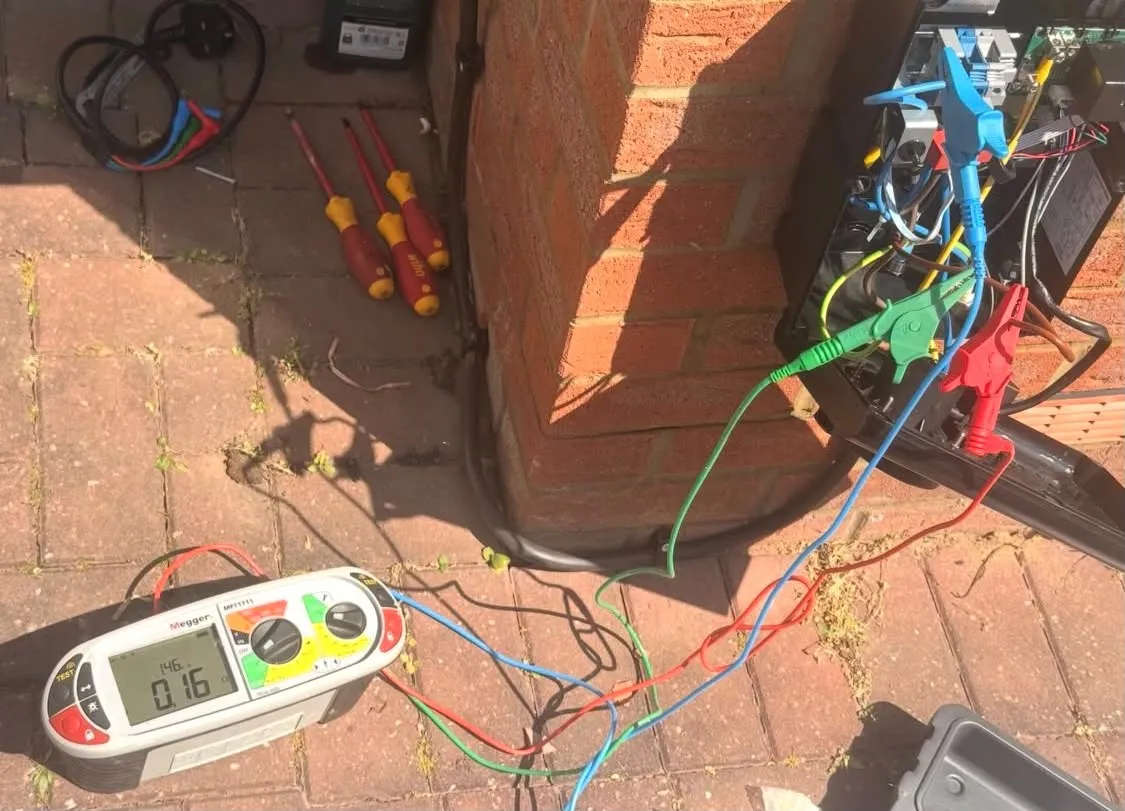
Dead and live testing is carried out on circuits to check insulation resistance, earth fault loop impedance and other key safety measurements.
03
Execution
Any findings are coded accurately using the standard C1, C2, C3 and FI system, reflecting genuine risk rather than guesswork.
04
Testing and verification
Results are cross-checked against BS 7671 requirements to make sure every code applied is justified and consistent.
05
Completion and guarantee
You receive a clear written report explaining any defects in plain English, with recommendations for next steps. We guarantee our work, with scope depending on the job.
What you get
The benefits
A straightforward route to compliance
A properly carried out EICR gets landlords and businesses up to date with their inspection obligations without unnecessary delay.
Genuine safety improvements, not guesswork
Testing identifies real risks like poor earthing, deteriorated insulation or overloaded circuits before they cause harm.
A longer safe life for the installation
Catching and addressing defects early extends the usable life of wiring, consumer units and accessories.
Avoiding costs from over-coding
Accurate coding means you're never paying to fix something that was never genuinely a safety issue.
Reliable paperwork for lenders and insurers
A clear, properly completed report satisfies mortgage, insurance and tenancy requirements without back-and-forth.
Peace of mind for landlords and homeowners
Knowing exactly where your installation stands removes the uncertainty of not knowing what's behind the walls.
In detail
Understanding EICRCodes and Process
The coding system and process behind an EICR can be confusing if you've not seen one before, so here's what each part actually means.
The coding system explained
Findings on an EICR are coded C1, C2, C3 or FI. A C1 means danger present, requiring immediate action; a C2 means a potentially dangerous condition that needs remedial work; a C3 is an improvement recommendation that isn't a danger in itself; and FI means further investigation is needed to establish the full picture.
An installation is marked 'unsatisfactory' overall if any C1 or C2 codes are recorded, which is what triggers remedial action for landlords and most insurers.
Who carries out the inspection
Our EICRs are carried out by our team member holding City & Guilds 2391 Inspection and Testing, backed by the wider team's experience across domestic and commercial installations.
Proper inspection and testing requires calibrated test equipment and a methodical approach to every circuit, not just a visual once-over.
Domestic versus commercial EICRs
Domestic EICRs typically cover a single consumer unit and a manageable number of circuits, and can often be completed in a single visit depending on property size and accessibility.
Commercial EICRs are usually larger and more complex, covering multiple distribution boards, three-phase supplies and sometimes several buildings, so timescales and pricing reflect the scale of the installation.
What happens after the report
If the report comes back satisfactory, you simply keep it on file until the next inspection is due. If there are C1 or C2 findings, we'll explain exactly what needs doing and quote the remedial work separately.
We never assume you want remedial work done immediately just because it's flagged. We'll talk you through priorities so urgent items are dealt with first.
Landlord obligations and timing
Landlords in England are generally required to have an EICR carried out at least every five years, or at change of tenancy if sooner, and to provide a copy to tenants and, on request, to the local authority.
Leaving an EICR until the last minute before a tenancy starts can be risky if defects are found, since there may not be time to complete remedial work before a new tenant moves in.
Understanding your report
An EICR can look technical on first read, so we take the time to explain it in plain English. Each observation is given a code: C1 means danger is present and immediate action is needed, C2 means a potential danger that needs urgent remedial work, C3 means improvement is recommended, and FI means further investigation is required. A report with any C1, C2 or FI observations is classed as unsatisfactory.
We will tell you clearly which items must be fixed, which are recommendations, and what each one means for safety. If remedial work is needed, we can give you a price to carry it out, test it, and update your paperwork, so you have one team handling the whole process from inspection to a satisfactory result.
Inspection & Testing (EICRs): your questions
How much does an EICR cost?
+
EICRs are priced per property depending on size, number of circuits and accessibility, so we'll give you a cost once we know the details rather than quoting a blanket figure.
How long does an EICR take?
+
It depends on the size of the property and the number of circuits. A typical home can often be done in a single visit; larger or commercial properties take longer. We'll give you a timeline before starting.
How often do I need an EICR?
+
Landlords in England are generally required to have one carried out at least every five years. Homeowners and businesses can decide based on the age and condition of the installation.
What happens if my EICR comes back unsatisfactory?
+
We'll explain any C1 or C2 findings in plain English and quote the remedial work separately so you can plan and prioritise what needs doing first.
Who actually carries out your EICRs?
+
Our EICRs are carried out by our team member who holds the City & Guilds 2391 Inspection and Testing qualification.
Can I get an EICR done at short notice before a tenancy starts?
+
We work Monday to Sunday, 6am to 10pm, and will do our best to fit you in, though we'd always recommend booking as early as possible in case remedial work is needed.
Do you cover Daventry and Rushden for EICRs?
+
Yes, alongside Northampton we regularly carry out EICRs in Daventry, Rushden and across Northamptonshire, Bedfordshire, Milton Keynes, Cambridgeshire and Oxfordshire.
Is the report guaranteed?
+
We guarantee our work, including inspection and testing. The length and scope of any guarantee depends on the job, which we'll confirm with you directly.
Where we work
Based in Great Houghton, we cover Northamptonshire, Bedfordshire, Milton Keynes, Cambridgeshire and Oxfordshire, and we're best known in Northampton, Daventry and Rushden.
Book Your EICRwith Doe Electrical
Call 07904 890325 to arrange your inspection and get a clear, properly coded report you can rely on.
Local call-out £120 including your first hour · £45/hour after · Open 7 days, 6am–10pm